
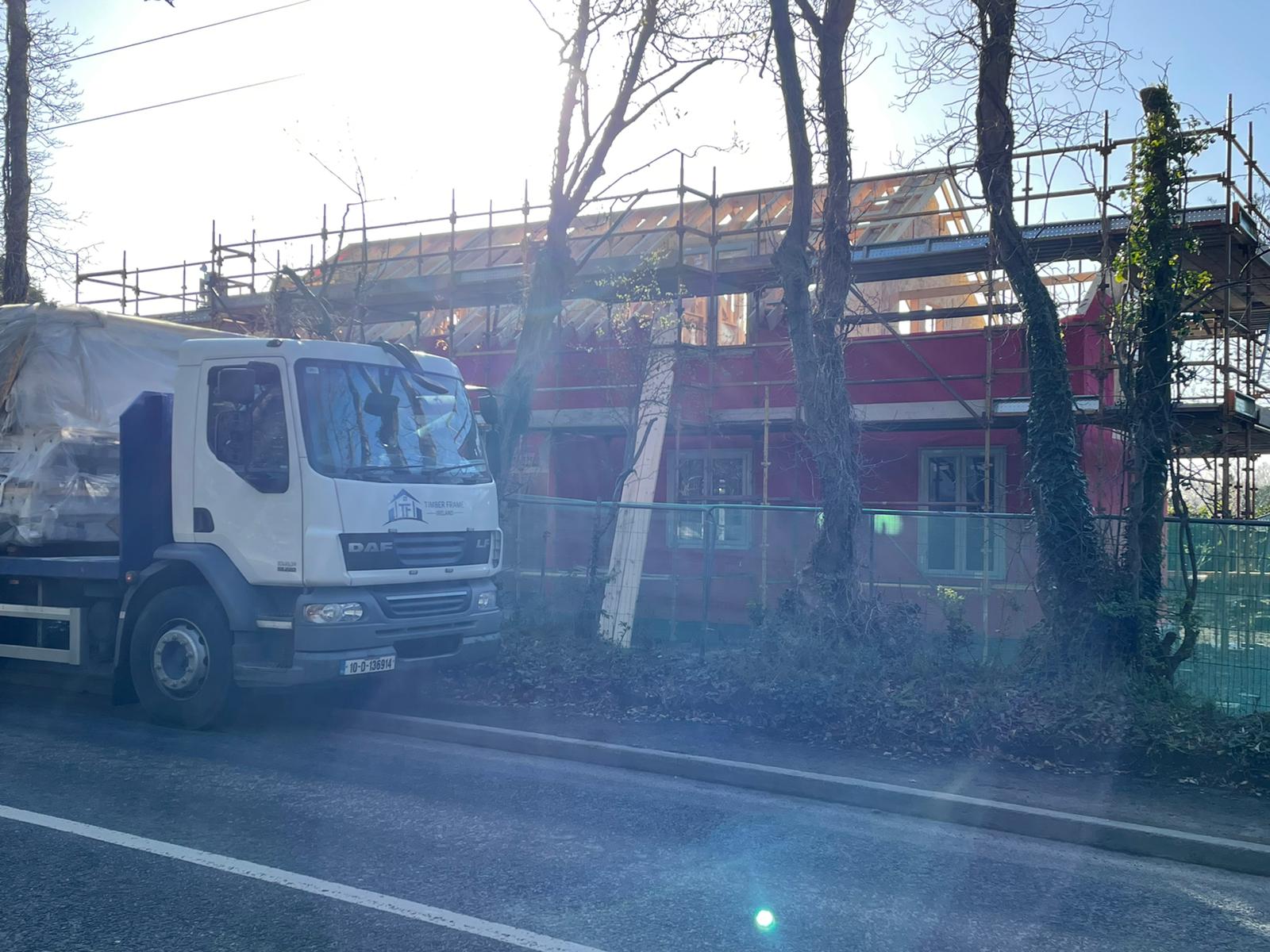
Timber Frame vs Block Build in Ireland: Which Is Best in 2026?
If you’re planning to build a home in Ireland, one of the first decisions you’ll face is:
Should I choose timber frame or traditional block construction?
For decades, blockwork dominated the Irish housing market. However, timber frame construction has grown significantly in recent years as homeowners seek faster build times, improved energy efficiency and better overall performance.
So which option is right for your project?
Let’s compare the two.
Build Speed
One of the biggest differences between timber frame and block construction is speed.
Traditional block construction is built entirely on-site and is heavily influenced by weather conditions and labour availability.
Timber frame systems are precision manufactured in a controlled workshop environment before being delivered to site.
Once foundations are complete, a timber frame structure can often be erected within days.
Timber Frame Advantages:
✅ Faster construction programmes
✅ Reduced weather delays
✅ Earlier access for follow-on trades
✅ Faster route to a weather-tight building
For many self-builders, this can save weeks or even months on the overall build programme.
Energy Efficiency
Modern building regulations place huge emphasis on insulation, airtightness and thermal performance.
Timber frame construction naturally lends itself to high-performance wall systems.
At Timber Frame Ireland, our wall systems are designed to achieve excellent thermal performance through a combination of:
- High-performance insulation
- Reduced thermal bridging
- Airtight construction methods
- Precision manufacturing
The result is a warmer, more energy-efficient home with lower running costs.
Airtightness
Airtightness is one of the most important factors in modern home construction.
Poor airtightness can lead to:
- Higher heating bills
- Draughts
- Reduced comfort
- Condensation issues
Because timber frame panels are manufactured under controlled factory conditions, achieving high levels of airtightness is often easier and more consistent.
This is particularly important for low-energy and passive house projects.
Construction Quality
Timber frame components are manufactured in a controlled environment using precision equipment.
This offers several benefits:
✅ Consistent quality
✅ Accurate dimensions
✅ Reduced site waste
✅ Better quality control
Block construction relies more heavily on site conditions and weather during construction.
Both methods can produce excellent homes when built correctly, but factory-controlled manufacturing offers significant advantages.
Cost Comparison
One of the biggest misconceptions is that timber frame is significantly more expensive.
In reality, overall project costs are often very similar.
When comparing total build costs, it is important to consider:
- Build speed
- Labour requirements
- Reduced delays
- Energy performance
- Long-term running costs
Many homeowners find that the savings achieved through faster programmes and improved efficiency help offset any initial differences.
Labour Availability
The Irish construction industry continues to experience skilled labour shortages.
Timber frame construction reduces dependence on large numbers of on-site trades during the structural phase of the build.
Because much of the work takes place in the factory, site labour requirements are reduced.
This can improve programme certainty and reduce delays.
Environmental Impact
Timber is a renewable building material.
Many homeowners are now considering the environmental impact of their build alongside cost and performance.
Timber frame construction can help reduce the embodied carbon associated with construction while supporting more sustainable building practices.
Passive House & Low-Energy Homes
If your goal is to build a passive or low-energy home, timber frame offers significant advantages.
Our Passive and Passive Premium wall systems are specifically designed to achieve exceptional thermal performance while integrating seamlessly with:
- Heat pumps
- MVHR systems
- Underfloor heating
- Insulated foundation systems
This creates a complete building envelope designed for long-term comfort and efficiency.
What About Extensions?
Timber frame isn’t just for new homes.
Closed panel timber frame systems are increasingly being used for:
- Rear extensions
- Kitchen extensions
- Granny flats
- Garden rooms
- Home offices
Because the panels arrive pre-manufactured, extension projects can be completed with less disruption, reduced noise and faster build times.
This is particularly beneficial in urban areas such as Dublin where neighbours and access restrictions are important considerations.
So Which Is Better?
The truth is both methods can create excellent homes.
However, modern timber frame construction offers several advantages that make it increasingly attractive for Irish self-builders.
Choose Timber Frame If You Want:
✅ Faster build times
✅ Better airtightness
✅ Excellent insulation performance
✅ Reduced weather delays
✅ Precision manufacturing
✅ Lower long-term energy costs
✅ Passive house compatibility
For many homeowners building in 2026 and beyond, timber frame provides the ideal combination of speed, comfort, sustainability and energy efficiency.
Thinking About Building?
At Timber Frame Ireland, we manufacture precision-engineered timber frame systems from our modern production facility and supply projects nationwide.
Whether you’re planning a family home, passive house, extension or self-build project, our team can help you choose the right solution for your build.
Submit your plans here for a detailed quotation and expert advice on your project.
